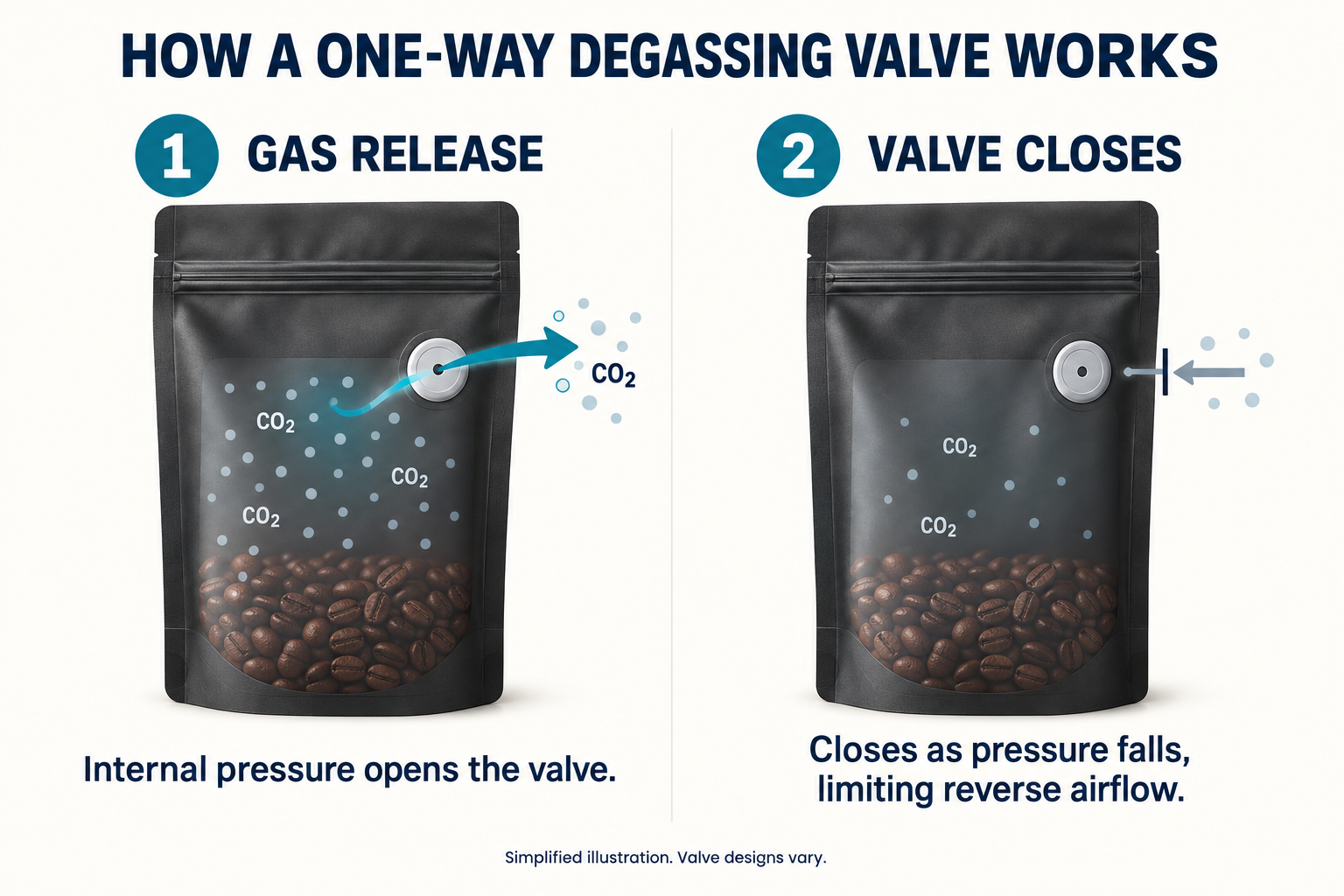
The small round valve on a coffee bag has a practical purpose: it allows gas released by roasted coffee to escape while limiting outside air entry.
Freshly roasted coffee continues to release carbon dioxide after roasting. When it is packed in a sealed bag, this gas can build up and cause the package to expand. A one-way degassing valve helps manage that pressure without leaving the package openly exposed to air.
However, a valve is only one part of the packaging system. Materials, heat seals, filling conditions and storage all influence how well the coffee is protected.
Here is what coffee brands should understand before choosing coffee bags with a valve.
1. Why Does Roasted Coffee Release Gas?
During roasting, physical and chemical changes occur inside the coffee beans, including the formation of gases such as carbon dioxide. Some of this gas remains within the bean structure and gradually escapes after roasting.
This release is known as degassing.
The rate and amount of gas release vary with factors such as roast profile, bean characteristics, storage temperature and whether the coffee has been ground. Grinding changes the release pattern by exposing more of the coffee’s internal structure.
For packaging decisions, the important question is how much gas your coffee will continue to release after the bag is sealed. There is no single waiting period that suits every product and packing process.
2. How Does a One-Way Degassing Valve Work?
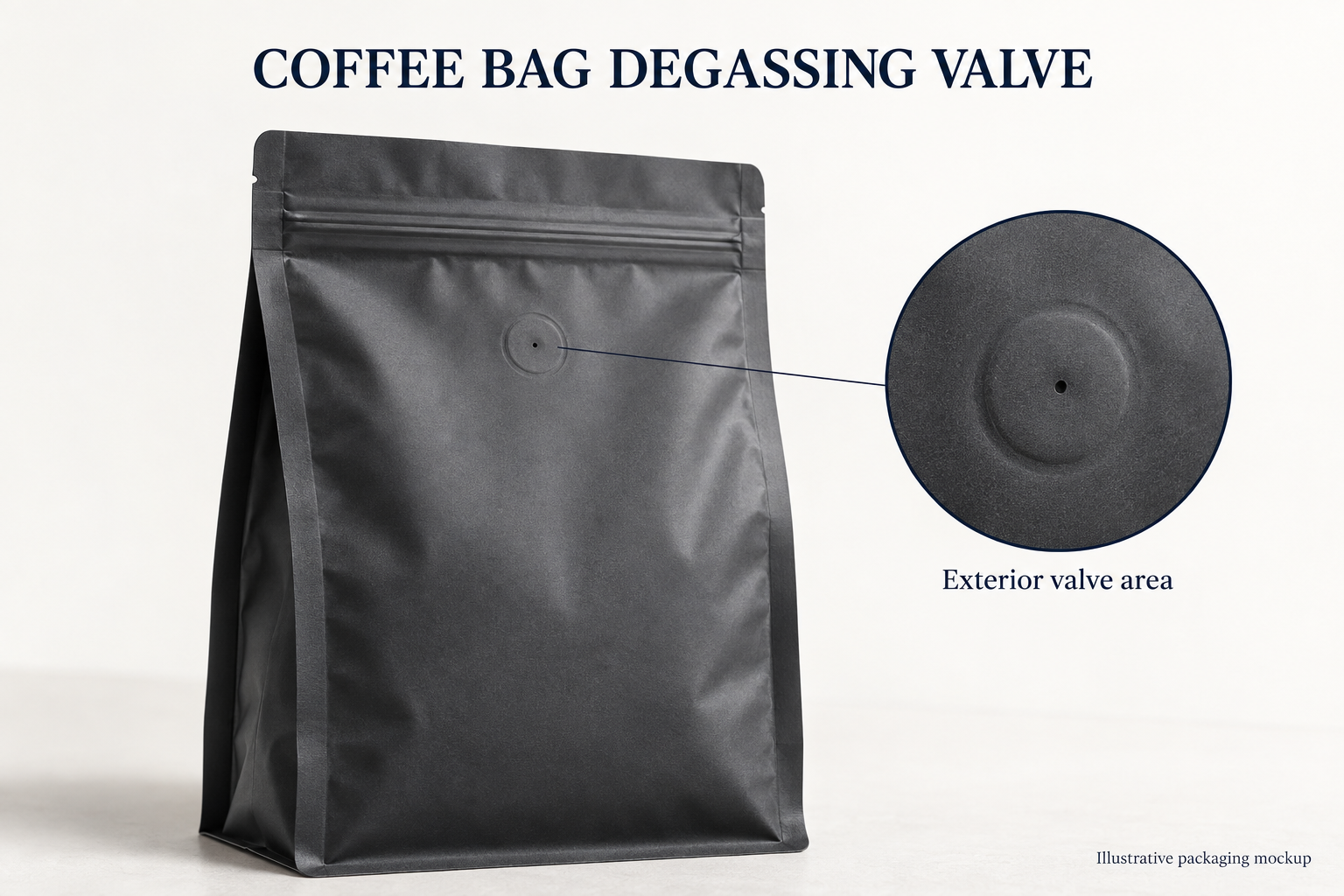
A one-way degassing valve responds to a pressure difference between the inside of the bag and the surrounding air. When internal pressure reaches the valve's opening threshold, its sealing element lifts and allows gas to escape. It closes again as the pressure falls.
This controlled opening helps relieve pressure while limiting reverse air entry through the valve. Performance depends on the valve design, its attachment and the complete package; it should be checked with the intended coffee and packing process.
3. When Do Coffee Bags Need a Degassing Valve?
A valve is useful when the coffee will continue releasing enough gas after sealing to create unwanted pressure. Freshly roasted whole beans are a common application. Ground coffee may also require a valve, depending on its remaining gas release and the packing schedule.
Assess roast-to-pack timing, coffee format, storage conditions and the planned package. A fixed waiting period or one valve specification will not suit every coffee. Use a filling and storage trial to check the proposed combination.
4. Why Materials and Heat Seals Still Matter
A valve manages gas release; the film structure and seals help control oxygen and moisture exposure across the rest of the package. A suitable valve cannot compensate for a leaking top seal, damaged film or an unsuitable barrier structure.
Ask about the proposed material's barrier performance under relevant test conditions, and keep coffee particles out of the sealing area. Evaluate the finished package before making shelf-life claims.
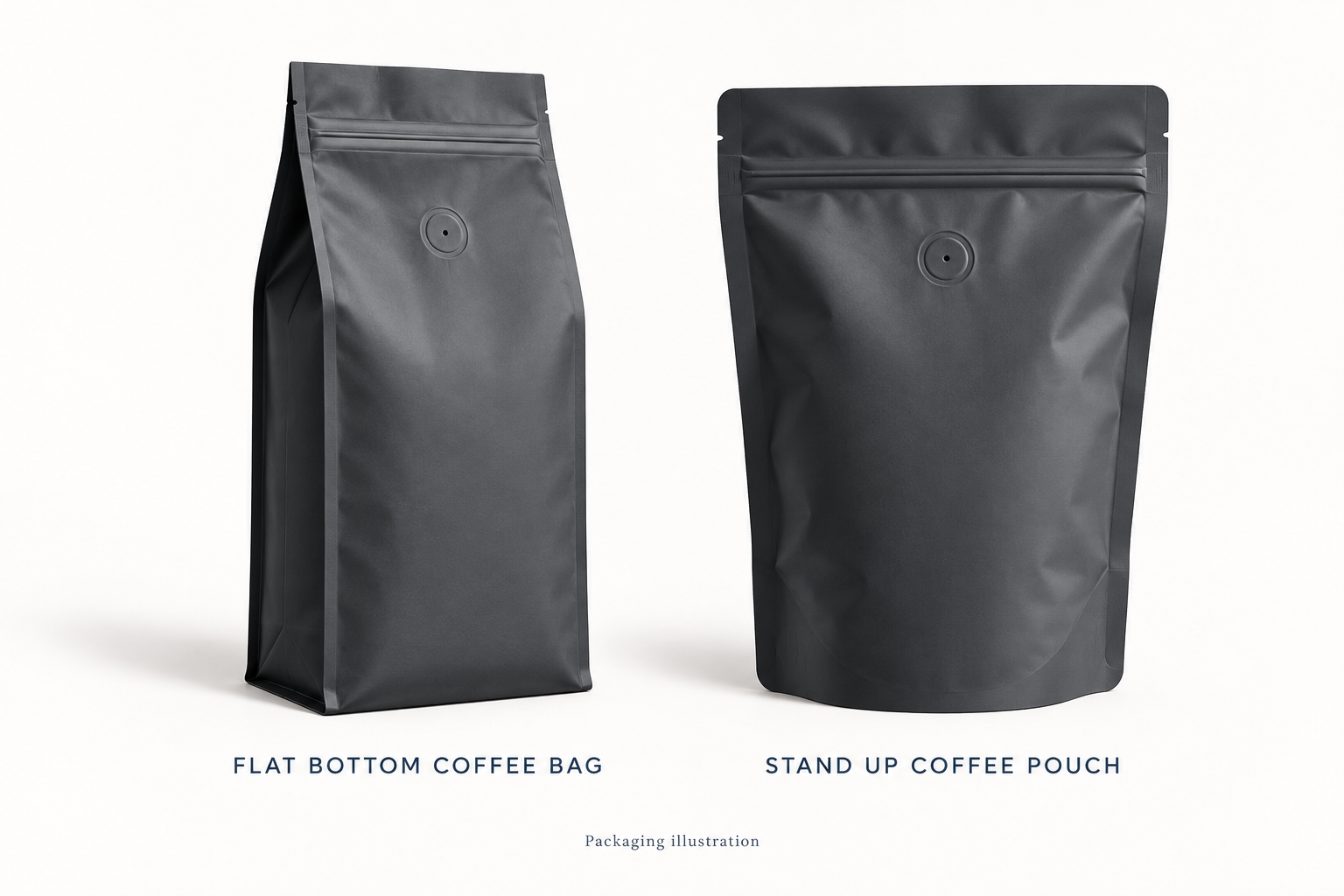
Bag construction also affects filling and valve placement. Compare flat bottom coffee bags and stand up pouches when choosing a format for your packing process.
5. Valve, Zipper and Nitrogen Flushing: Different Functions
| Feature | Main function | What to remember |
|---|---|---|
| Degassing valve | Releases gas as pressure builds after sealing | Valve suitability and attachment need checking |
| Zipper | Allows the customer to reclose an opened pack | It does not replace the initial heat seal or remove oxygen |
| Nitrogen flushing | Aims to reduce oxygen during packing | Results depend on equipment, settings and the complete package |
These features can be used together when appropriate. None independently guarantees a freshness period. Confirm the final combination through your packaging evaluation.
6. What to Confirm Before Ordering Coffee Bags with a Valve
When ordering custom coffee bags with a valve, specify more than “add a coffee valve.”
| Question | Why it matters |
|---|---|
| Which valve is suitable for this coffee and packing process? | Valve selection should match the product and expected gas release |
| What are its opening, closing and reverse-leakage characteristics? | These help assess whether the valve suits the intended application |
| Is it compatible with the proposed film structure? | Attachment and sealing must work with the bag material |
| How is the valve installed and checked? | Poor attachment can create a leakage path |
| Is particle protection needed? | Fine coffee particles may affect valve operation |
| What food-contact documentation is available? | Documentation should be relevant to the materials and target market |
| Can we test finished bags before production approval? | A complete bag trial is more useful than evaluating the valve alone |
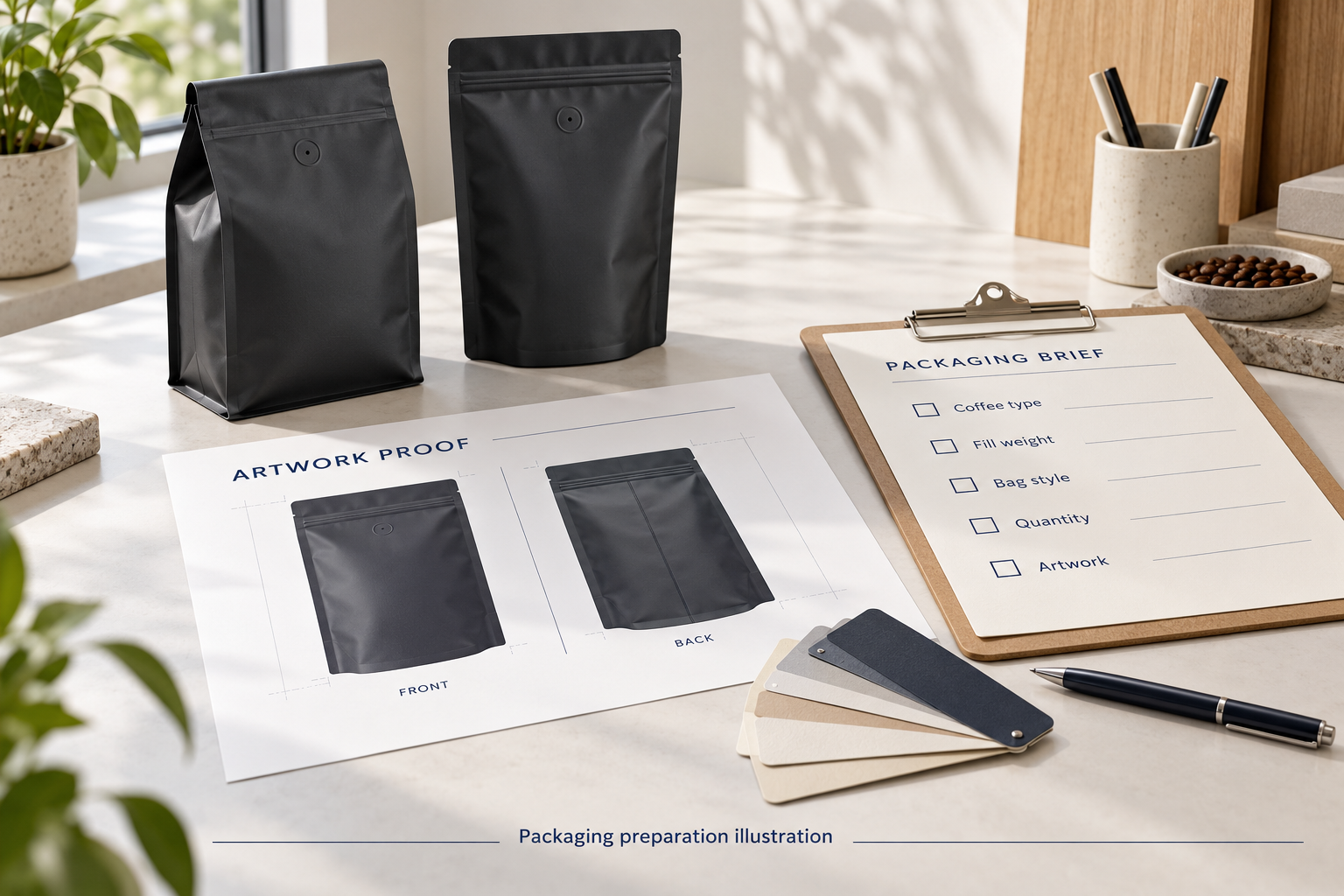
Also share your coffee type, roast-to-pack timing, target fill weight and storage conditions. These details help the supplier assess the application. Use our coffee bag size guide to plan a filling trial and confirm top sealing clearance.
7. How to Test Coffee Bags with a Valve
Test the finished bag using your actual coffee and normal packing equipment.
Check the valve position and attachment before filling. After sealing, monitor how the package behaves over a suitable evaluation period under representative conditions.
The evaluation should consider:
Whether the bag expands excessively.
Whether gas can escape as intended.
Whether the valve attachment and bag seals remain intact.
Whether product particles or packaging folds obstruct the valve.
Whether the package performs adequately during handling and transport.
A bag that feels flat is not proof of an effective oxygen barrier. Likewise, some expansion does not by itself prove that the valve has failed.
If a package swells excessively, investigate the coffee’s gas release, valve selection, installation and possible blockage. Assess leakage and shelf-life performance separately using appropriate tests.
8. What Should Customers Know About the Valve?
Customers may notice the valve and assume it is intended for smelling the coffee. Its primary role is pressure management.
Repeatedly squeezing a bag to force aroma through the valve is not a reliable way to assess freshness or packaging quality.
After opening, customers should follow the product’s storage instructions, reclose the package carefully and keep it away from excessive heat, moisture and light.
A zipper helps with everyday reclosure, but the package has already been exposed to air once opened.
Frequently Asked Questions
Is the valve on a coffee bag an air hole?
No. A one-way degassing valve is designed to open under a pressure difference and close again afterward. An uncovered hole would allow uncontrolled exchange with outside air.
Does a degassing valve make coffee last longer?
It supports a packaging system that allows gas release while limiting air entry through the valve. Actual shelf life depends on the complete package, packing conditions, coffee and storage environment. The valve alone cannot guarantee a freshness period.
Do ground coffee bags need a valve?
They may, depending on the coffee’s remaining gas release and packing schedule. Ask the supplier to assess valve suitability and whether fine particles require additional protection.
Does a valve replace nitrogen flushing?
No. Nitrogen flushing aims to reduce oxygen during packing, while the valve releases gas that builds up afterward. They serve different functions.
Can recyclable coffee packaging include a valve?
Potentially, but the complete package must be assessed, including the valve, film, zipper, labels and other components. Confirm compatibility with relevant collection and recycling systems before making a recyclability claim.
Discuss Your Coffee Bag Valve Requirements
When discussing coffee packaging with FWPacks, share whether you pack whole beans or ground coffee, your usual roast-to-pack timing, target fill weight and preferred bag style.
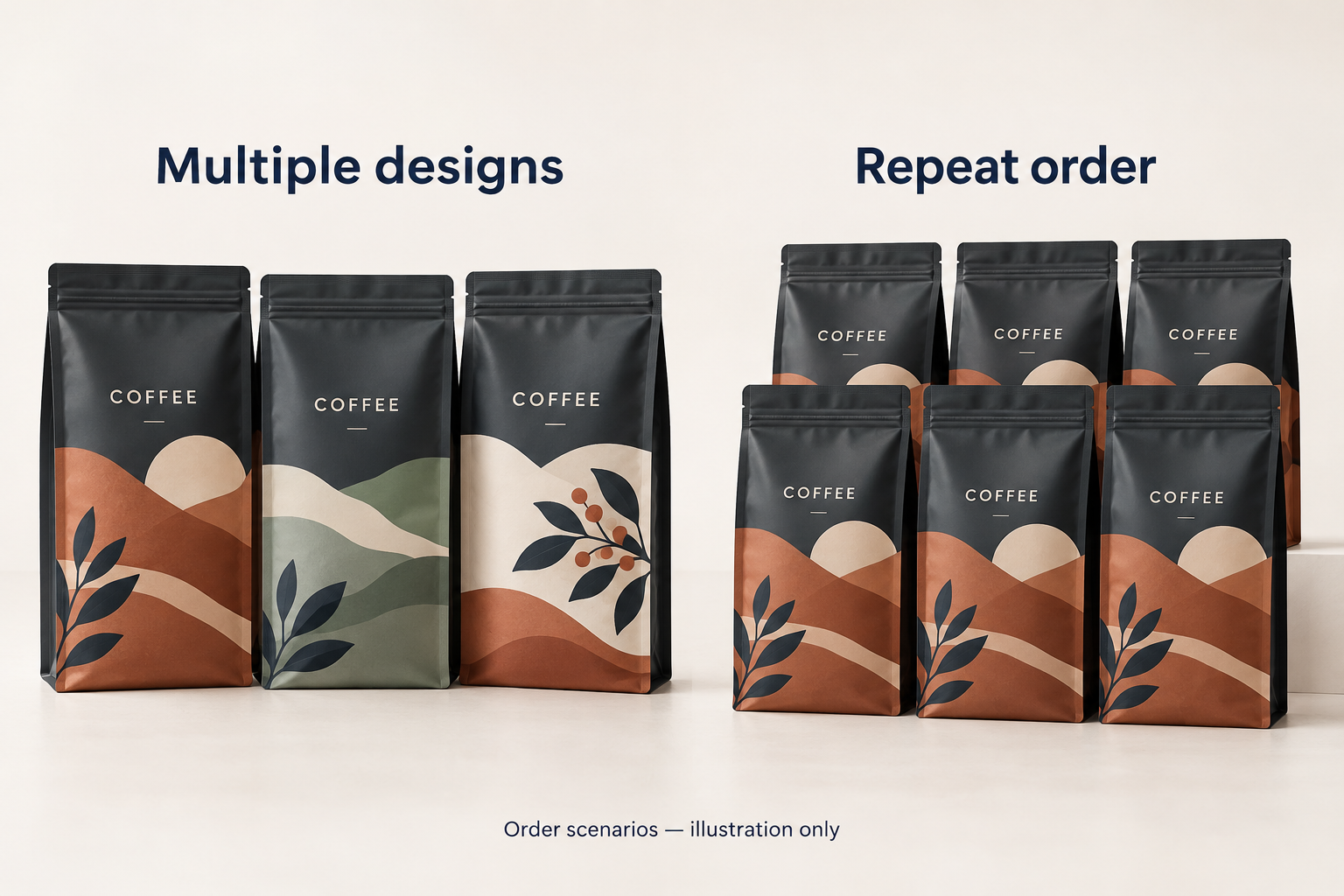
Include your quantity per design, artwork status and delivery destination. These details provide a practical starting point for discussing materials, valve placement and finished-bag samples.